Black Americans Are Embracing a New Era of Financial Inclusion

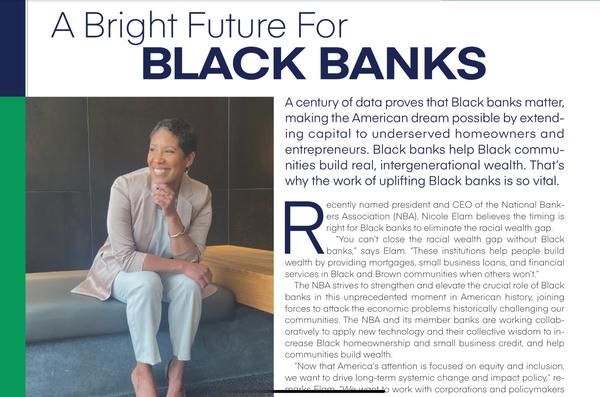
In a country where wealth disparities persist, financial inclusion is still the road that leads to equity. Black Americans have historically faced barriers to wealth generation and investment opportunities. Today, the tide is turning, and technology is paving the road to education, access, and empowerment.

A myriad of new technologies continue to create more opportunities for our historically underserved communities to participate in the financial system, including in the areas of banking and i...

Three Reasons Why Everyone Has a Role to Play in the Green Schools Movement

A California statewide coalition of nearly 50 education and children’s health experts banded together to explore climate change from the unique perspective of health and education for children.

Through their research, 14 evidence-based recommendations were developed to center resilience against climate change within California’s public school systems. It explores how the state can create “schools that help to mitigate both the causes and impacts of climate change.”

This report focuses on Calif

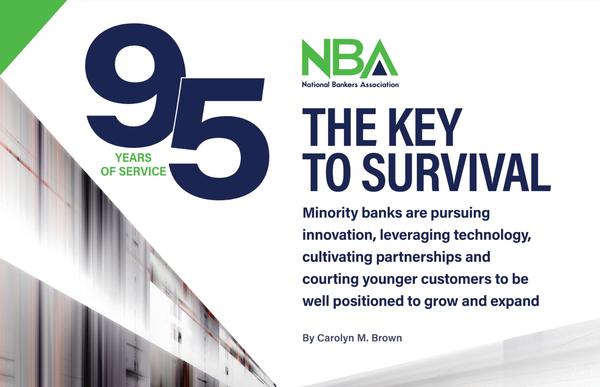
Minority-Owned Banks in the United States on a Mission to Survive and Thrive

Overcoming obstacles is nothing new for Minority Depository Institutions (MDIs)1 in the United States. They were formed in the early 1900s from the need to serve their communities and combat the discriminatory practices that those communities, frankly, still face today. Despite recent years’ attention amidst nationwide calls for racial and economic justice, they still face some of the toughest challenges in their histories.

Due to their concentration in communities of color and low- to moderate

Big banks and regulators: Do more to close the racial wealth gap

CEOs of America's largest retail banks are testifying before Congress this week. As lawmakers turn their eyes on the banking industry, minority banks and their partnerships with the largest U.S. banks can shed light on the industry's efforts to eliminate racial wealth disparities and the growth that these partnerships can drive. To close the racial wealth gap, banks should deepen partnerships with minority-led banks, and policymakers should eliminate regulatory barriers that prevent these banks

CEO Thought Leadership | Financial Inclusion

Will a digital dollar increase financial inclusion? It certainly could but I think the jury is still out on just how much. Proponents see a digital version of the US dollar (or a digital dollar) as a way to make banking more accessible to the unbanked and underbanked. It offers lower transaction costs and reduces barriers for those who lack access to banking services like checking accounts and loans. But critics see lack of technology (including internet and smartphones needed to connect to the

Minority-owned banks need more help and fewer setbacks from Washington

Since 1976, Commonwealth National Bank has been expanding economic opportunities for underserved residents of Mobile, Ala. One of 143 Minority Depository Institutions (MDIs) in the country, Commonwealth makes loans available to business owners and consumers that traditional banks and financial service providers often overlook.

However, like many other banks that serve minority communities, Commonwealth has had its share of challenges. Minority Depository Institutions face unique obstacles. For

CEO Thought Leadership | Financial Literacy

An equitable future does not ignore that data clearly shows race matters. The data doesn't suggest that we live in a race-neutral environment. White households hold 8 to 10 times more total wealth than households of color. Entrepreneurs of color are twice as likely to be denied a small business loan, even if they have the same credit profile as their white counterparts. Minority communities are 2 to 3 times more likely to be unbanked and underbanked. Those communities also have a higher climate

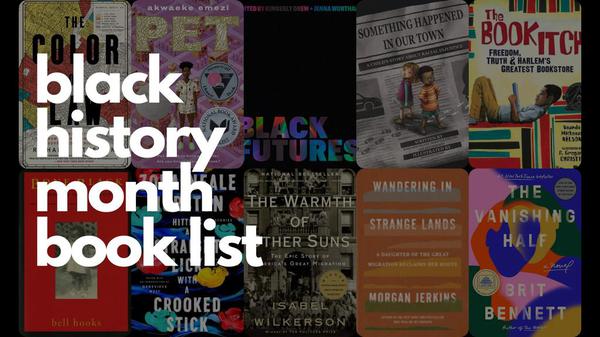
GSNN's Black History Month Book List

As the past year has encouraged more reflection on the divisive race relations in this country, we want to take a moment to uplift positive stories and celebrate the accomplishments of Black Americans during Black History Month. We hope to remind our supporters that learning from the experiences and perspectives of Black Americans throughout history is more material than can be covered in 28 days, and Black history is all of our histories.

This year’s Black History Month theme is “Black Family: